CASE STUDY
Digital alarm, workflow, and bed management at Østfold Hospital Trust
Østfold Hospital Trust, located southeast of Oslo, Norway, opened in 2015 a new hospital. The hospital has 5,000 employees, 630 beds and 21 operation rooms.
In 2017 they received HIMSS level 6 certification as the first hospital in the Nordics. DNV Imatis is a key supplier of information technology to the hospital and has been integral to the hospital achieving the certification.
Almost all hospital employees use the solutions daily to support their work processes through around 180 large displays, more than 1800 smart phones and several desktop computers and self-check-in kiosks.

Background
Østfold Hospital Trust was one of the first hospitals in Norway to implement a quiet, message-based working environment, eliminating traditional audio alarms in patient areas. Through a long-term collaboration with DNV Imatis, the hospital has digitalised a wide range of workflows to enhance patient safety, resource coordination, and operational efficiency.
With approximately 380 beds in operation, Sykehuset Østfold relies on digital whiteboards, mobile role-based communication, and automated task handling to support both clinical and non-clinical functions across the hospital.
Challenges
Hospitals today face several operational challenges that impact both staff efficiency and patient experience. Excessive noise from alarms is a common issue, making it difficult for staff to concentrate and creating an uncomfortable environment for patients. Alerts are often too generic, typically triggered at room level rather than being patient-specific, which reduces their usefulness and urgency. Many key processes, such as bed turnaround, portering, cleaning, and internal deliveries, still rely heavily on manual methods, slowing down workflows and increasing the risk of errors. In addition, healthcare teams often have limited visibility into both current and projected bed occupancy and nursing workload, making it harder to plan and allocate resources effectively. Cross-departmental coordination is frequently delayed or inefficient, further compounding these challenges and affecting the overall flow of care.
Solution
Østfold Hospital implemented DNV Imatis digital platform to transform how information is exchanged and acted upon across the hospital – from nurse calls and telemetry alerts to cleaning coordination and bed management.
Key components, functionality and results

Silent alarm management
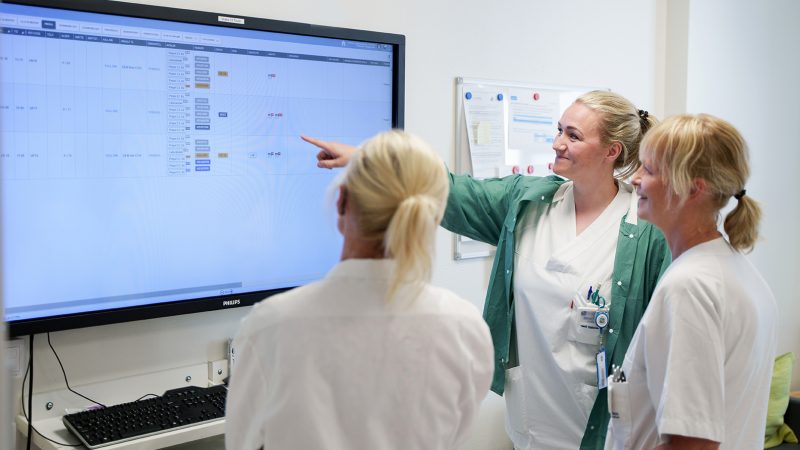
- Nurse call alerts are sent directly to the responsible nurse’s mobile device. No corridor beeps or workstation alarms.
- Visual indicators remain active (door lights, ceiling displays), but sound is muted.
Result: Patient safety is enhanced through faster response times and more reliable notification routing. The quieter environment reduces stress for patients and staff, supporting better overall care.
Bed and capacity management
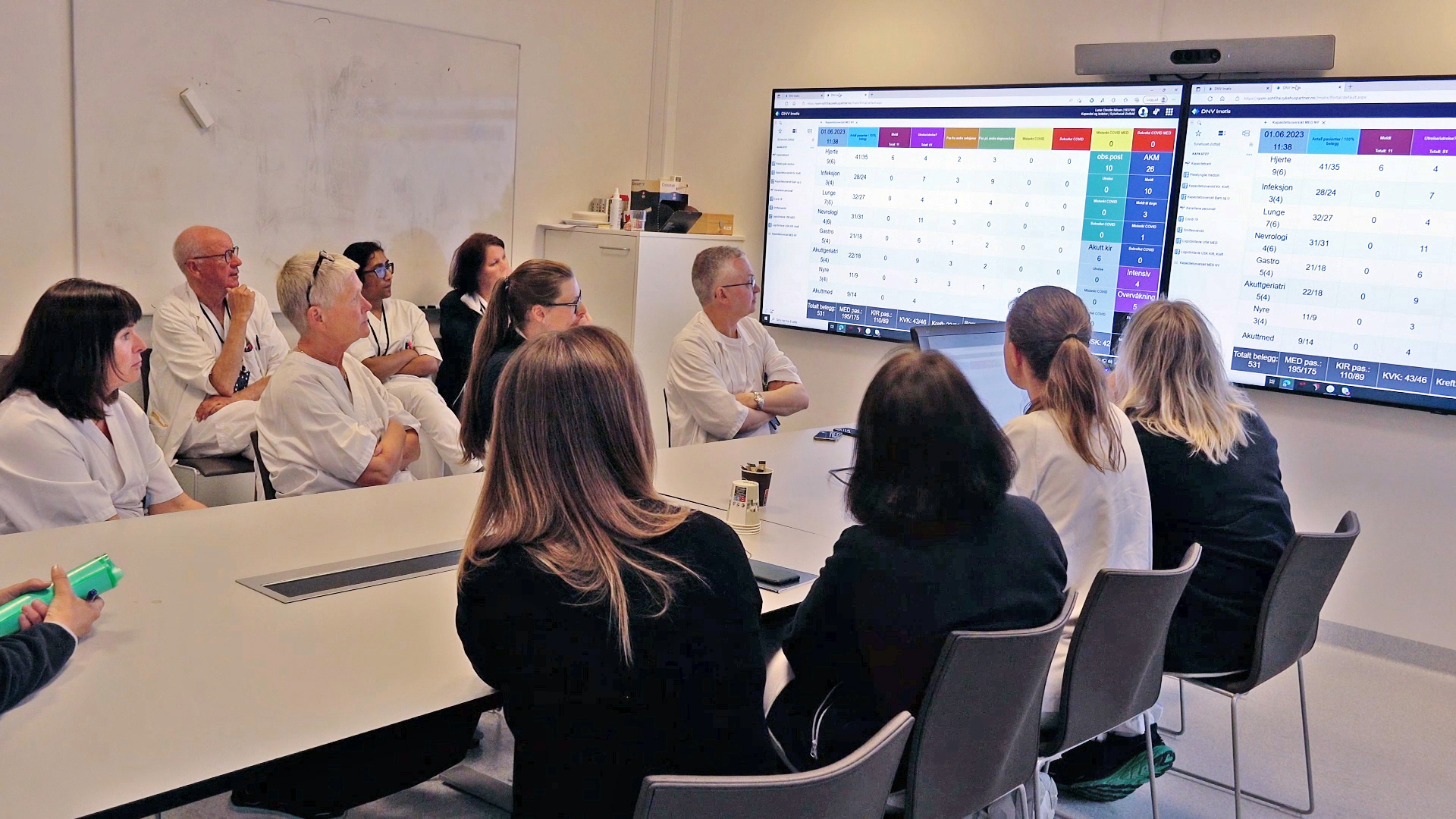
- Digital whiteboards show real-time occupancy, discharges, acuity levels, and emergency department inflow.
- Staff can predict the next 24 hours, plan for bottlenecks, and allocate resources accordingly.
- Patient acuity registration supports accurate nursing workload assessment across wards, helping unit managers balance teams.
Result: Improved patient flow, smoother transfers and reduced overcrowding. Patient safety is improved by ensuring appropriate nurse-to-patient ratios and avoiding understaffing in high-acuity areas.
Operational impact
- Digital coordination reduced bed turnaround time from 42 to 20 minutes.
- At ~100 daily admissions, this results in 36,500 annual turnarounds.
Result: If a cleaning turnaround is valued at €43,5/hour, and 50% of that time is relevant, the efficiency gain corresponds to: ~ €130,000 in annual operational savings, not counting gains from increased throughput.
Role-based communication
- Staff use corporate mobile phones and log in per shift to receive tasks and messages based on their assigned roles (nurse, doctor, porter, etc.).
Result: clear accountability and instant access to patient-specific information. Patient safety benefits from streamlined handovers and fewer communication gaps.
Patient-specific notifications
- Exact bed and patient identity is now linked to each alert – not just the room number.
- Notifications are routed to the correct caregiver based on role and assignment.
- Supports customised telemetry monitoring: alerts triggered for critical changes in blood pressure, oxygen saturation, or other vital signs.
Result: Quicker, targeted response and reduced information noise. Enhanced patient safety due to timely intervention on deteriorating conditions.
Catering and waste reduction
- Nurses order meals per patient via whiteboards, as late as two hours before mealtime.
Result: Buffet staff have direct access to orders, helping adjust for patient needs (e.g. fasting, special diets) and reduce food waste. Better patient safety by avoiding incorrect meals and supporting recovery through appropriate nutrition.
Laboratory turnaround time improvement
- The time from the decision to take a sample from an inpatient to receiving laboratory results has been reduced by as much as two hours, enabling quicker diagnosis and treatment decisions.
Fall risk monitoring
- Enhanced visibility and tracking of patients’ fall risk profiles have contributed to a measurable reduction in falls across wards.
Logistics and support services
Digital boards and mobile alerts are used to coordinate:
- Cleaning services – real-time visibility of discharges, infections, and pending cleaning tasks.
- Porter services – task requests entered on whiteboards, received directly on porter phones with minimal keystrokes.
- AGV (Automated Guided Vehicle) notifications – service staff notified when deliveries (e.g. linens, supplies) are en route.
- Pneumatic tube system alerts – the assigned staff member is notified immediately upon delivery of medications or blood products.
Results:
- Faster task completion and fewer missed or delayed handovers.
- Greater transparency and resource alignment.
- Improved patient safety due to timely availability of medications, sterile environments, and essential supplies.
- Fewer unnecessary porter trips and improved task flow. Østfold Hospital has seen a 2% reduction in unnecessary trips, while other healthcare trusts report estimated reductions of up to 7%.
Integrations
The DNV Imatis platform is integrated with more than 50 clinical and non-clinical systems, including:
- Electronic Health Records (EHR)
- Nurse call systems
- Lab and telemetry systems
- Wireless duress alerts
- Real-time location tracking
- Support services (cleaning, portering, logistics)
- Pneumatic tube and AGV delivery systems

Results and outcomes
Alarm management
Faster, role-based alerts with patient-specific detail; improved response times; reduced alarm fatigue.
Patient safety
Fewer missed alerts; more timely interventions; better escalation of deteriorating patients.
Operational oversight
Real-time view of beds, discharges, and workload across units; supports predictive capacity planning.
Bed turnaround time
Reduced from 42 to 20 minutes, enabling ~36,500 faster turnarounds annually at high-volume hospitals.
Cleaning and portering
More efficient task routing; estimated NOK 1.5 million saved annually through improved coordination.
Workforce efficiency
Fewer distractions; shift-based mobile access improves task clarity and reduces handover errors.
Food services
Late-stage, patient-specific ordering reduces waste; improves nutrition safety and supports recovery.
Østfold Hospital Trust has demonstrated how a comprehensive digital platform can support both clinical care and support services through real-time visibility, role-based messaging, and structured coordination. The ability to respond quickly to alerts, plan resource use based on current acuity and occupancy, and automate formerly manual tasks has allowed the hospital to provide better care in a quieter, safer, and more efficient environment, ultimately resulting in higher productivity.
Explore more videos from the Østfold Hospital Trust >


Reference site visits to Østfold Hospital Trust
Østfold Hospital Trust is our official reference site, and we regularly organise in-person visits throughout the year for interested hospitals, health authorities, IT departments and clinical teams.
These visits offer a first-hand opportunity to:
- Observe digital workflows and bed coordination in practice
- See how real-time alerting and mobile messaging support clinical staff
- Discuss with frontline personnel how the system improves logistics, communication and planning
- Learn directly from the hospital’s experience in achieving HIMSS EMRAM level 6
Interested in visiting?
We welcome you – or your team – to join us in Norway.
Send us an inquiry to get more information about upcoming visit dates and availability.
Want to learn how DNV Imatis can improve efficiency in your healthcare operations?
DNV Imatis helps healthcare organisations improve efficiency through real-time information sharing, streamlined workflows and patient journeys, and smarter resource management. Our solutions support staff, enhance patient safety, and improve the overall care experience — while reducing stress and increasing productivity.
Are you curious to find out more, we’re here to help.

Silent Hospital implementation at Royal Cornwall Hospitals NHS Trust

Improving patient flow at Haraldsplass Diaconal Hospital