
10 killer questions to future-proof your nurse call for Hospital 2.0
The New Hospital Programme (NHP) marks a fundamental change in how hospitals are built and run. As we move towards Hospital 2.0, standardised single-room designs improve patient privacy and infection control but also change the nature of nursing.
Longer corridors, closed doors and larger travel distances can leave both staff and patients feeling isolated. For the patient, being behind a closed door can create a sense of being cut off from care, while the inability for staff to hear clinical alarms from the corridor can create a dangerous information vacuum. To bridge this gap, the nurse call system must be viewed as the clinical communication hub of the hospital: a critical piece of care infrastructure that eliminates the information vacuum and ensures no patient alert goes unheard.
Success under the NHP model requires moving from simply owning kit to ensuring every system works as one integrated whole. If your nurse call system cannot talk to your wider digital ecosystem or support mobile working, it becomes a legacy constraint. To help Trust leads avoid a costly procurement mistake, here are the 10 killer questions that define a future-proof clinical environment.
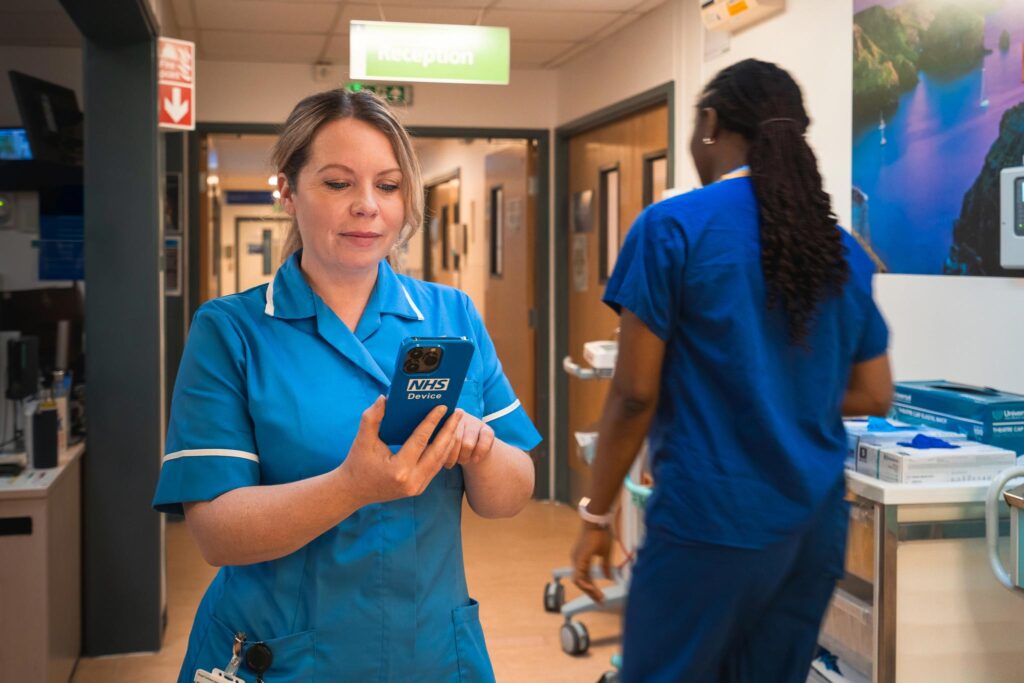
Photo credit: Wandsworth Healthcare RCHT Silent Ward
Longer corridors, closed doors and larger travel distances can leave both staff and patients feeling isolated. For the patient, being behind a closed door can create a sense of being cut off from care, while the inability for staff to hear clinical alarms from the corridor can create a dangerous information vacuum. To bridge this gap, the nurse call system must be viewed as the clinical communication hub of the hospital: a critical piece of care infrastructure that eliminates the information vacuum and ensures no patient alert goes unheard.
Success under the NHP model requires moving from simply owning kit to ensuring every system works as one integrated whole. If your nurse call system cannot talk to your wider digital ecosystem or support mobile working, it becomes a legacy constraint. To help Trust leads avoid a costly procurement mistake, here are the 10 killer questions that define a future-proof clinical environment.
Photo credit: Wandsworth Healthcare RCHT Silent Ward
- Is it open protocol? Proprietary systems trap a Trust in a closed ecosystem. An open-protocol system, like Wandsworth’s IPiN Evolution, ensures the Trust owns its infrastructure, allowing for long-term flexibility without vendor lock-in.
- Does it have documented APIs? Digital maturity fails when data stays in a bubble. The system must share data with your EPR and digital whiteboards so when a button is pressed, it becomes an actionable event that updates clinical dashboards in real time.
- Is it Silent Hospital ready? To reduce alarm fatigue, the system must route alerts directly to role-based mobile devices. While these systems are designed to be quiet, you should still have the option for audio alerts on critical alarms to ensure immediate awareness.
- Is it device-agnostic? Future-proof software should run on any hardware – whether that is iOS, Android or desktop. You should not be forced into buying proprietary handsets that limit your mobile strategy.
- Does it integrate with your existing staff directory? You should be able to leverage your IT network for secure single sign-on (SSO) and staff-role assignment. This ensures clinical alerts reach the right person at the right time.
- Is there cascade and escalation logic? If the assigned nurse is occupied, the alert must automatically move to the next available colleague. This ensures a response and a closed-loop process where no task is left unaccepted.
- Does it support BYOD and task-shifting? Through tools like DNV Imatis MyStay, patients can use their own mobile devices to request help. This task-shifting directs non-clinical requests to non-clinical staff, releasing time for nurses and reassuring patients who may hesitate to use a traditional call bell for simple needs.
- Is it MMC compatible? Hospital 2.0 relies on Modern Methods of Construction. Your hardware must support modular, off-site construction and rapid commissioning to meet NHP delivery timelines.
- Is there two-way speech for triage? Integrated two-way speech is vital for reducing wasted trips to single rooms. It allows staff to triage needs immediately, providing reassurance and reducing unnecessary PPE usage in isolation environments.
- Is the call data actionable? Can the system integrate with digital whiteboards and bed management systems? Aggregating nurse call data into a real-time overview of patient flow allows for better decision-making and has been shown to increase ward productivity by up to 20%.
Protecting your digital investment
Getting the hardware right is only half the battle. The other half is the partnership. Trust leads should look for partners with a proven track record in multi-vendor integration, including RTLS, staff attack and fall prevention systems. This helps ensure clinician safety in isolated environments, secure information flow between systems, delivery of alerts to the right staff at the right time, and actionable operational insight rather than disconnected alarms.
The biggest risk is installing 20th-century hardware in a 21st-century building and investing in systems that cannot adapt to future workflows, mobile care models or growing interoperability requirements.
By asking these killer questions, you can move beyond simply digitising the past and instead build a quiet, efficient and connected environment designed for the life of the hospital.