
CASE STUDY
Closing information gaps in portering and internal logistics at Region Värmland
Delivering more accessible, person-centred and joined-up care makes internal workflows a strategic priority. Region Värmland has therefore digitised the workflow for portering and internal logistics tasks to improve visibility, clarify responsibilities and strengthen day-to-day coordination.
“When internal workflows run more smoothly, this creates better conditions for the entire patient journey”, says Bjørn Olav Nygård, Business Development Manager at DNV Imatis in Sweden.
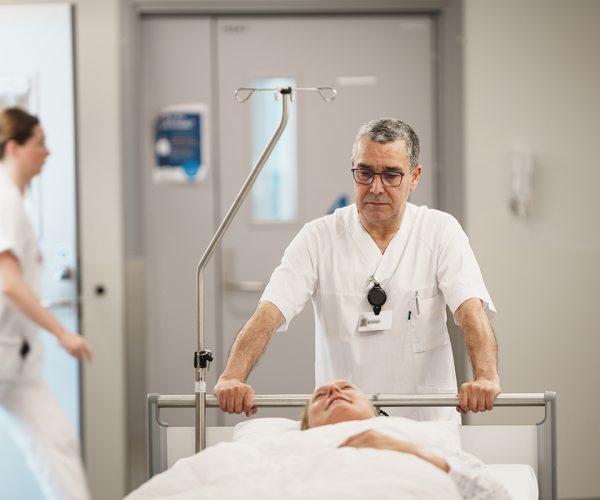
Internal workflows
Health services in Sweden face a familiar but difficult equation. An ageing population, growing care needs, workforce pressures and the need for financial sustainability mean they must deliver greater value from the resources available. For Region Värmland, meeting this challenge means making care more accessible and joined up. To achieve this, information, resources and responsibility need to follow the patient throughout their care journey.
“In practice, this presents a major operational challenge. What often holds back progress is not an unwillingness to collaborate, but the fact that information, responsibilities and workflows are not connected well enough. We therefore chose to digitise how portering and internal logistics tasks are managed, says Anders Olsson, Manager of Patient Transport”, Region Värmland.
“In practice, this presents a major operational challenge. What often holds back progress is not an unwillingness to collaborate, but the fact that information, responsibilities and workflows are not connected well enough. We therefore chose to digitise how portering and internal logistics tasks are managed”, says Anders Olsson, Manager of Patient Transport, Region Värmland.
Digital task management
Region Värmland is responsible for around 350,000 patient contacts each year and employs approximately 4,000 staff. Within portering and internal logistics, a team of around 30 porters handles approximately 150,000 tasks a year, including moving patients, specimens, documents and medicines. The entire workflow is now managed digitally, from request through to completion, monitoring and reporting.
“Tasks can now be allocated automatically or manually to available staff through a central coordination function. Those requesting tasks, coordinators and porters can communicate directly about each task, contributing to faster completion and better collaboration between departments”, continues Anders Olsson.
For porters, working digitally is part of the day-to-day routine. Using their mobile phones, they receive, accept and complete tasks, and can send and receive messages relating to tasks and operational matters. Access is role-based and linked to Region Värmland’s Active Directory, ensuring that each member of staff has access to relevant information and tasks.
Better visibility, clearer responsibilities
“The key is that digitalisation supports the day-to-day workflows through which care is delivered. When information is available in real time, it becomes easier to coordinate resources, make operational decisions and create better conditions for both staff and patients”, says Bjørn Olav Nygård.
For Region Värmland, digitalisation provides better visibility, clearer responsibilities and more structured monitoring. For staff, it means less friction in day-to-day work. For patients, it can contribute to a smoother journey through care.
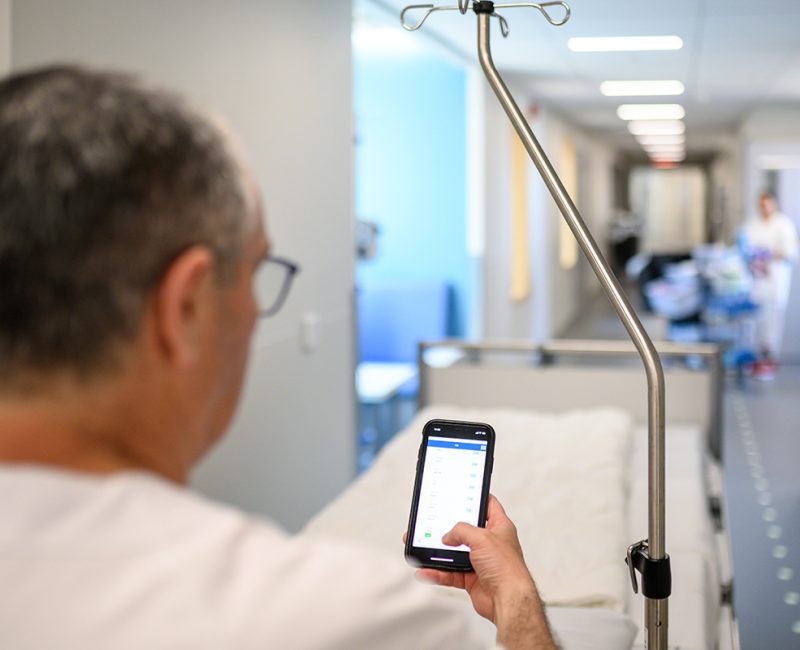
For Region Värmland, digitalisation provides better visibility, clearer responsibilities and more structured monitoring. For staff, it means less friction in day-to-day work. For patients, it can contribute to a smoother journey through care.
“Our collaboration with Region Värmland shows why internal logistics is more than a practical support function. In a health service where every resource needs to be used wisely, task workflows, communication and real-time visibility form part of the organisation’s ability to deliver against its objectives”, concludes Bjørn Olav Nygård.