
National portering standards: the 22 benchmarks and how trusts can evidence progress
On 8 July 2026, NHS England published the first national standards for healthcare portering services, setting out a consistent framework for safe, effective and patient-centred portering across every NHS organisation in England. Porters are among the largest non-clinical, patient-facing staff groups in the NHS, and are often the first and last member of staff a patient has contact with. Until now, the profession has had no single national benchmark to measure itself against.
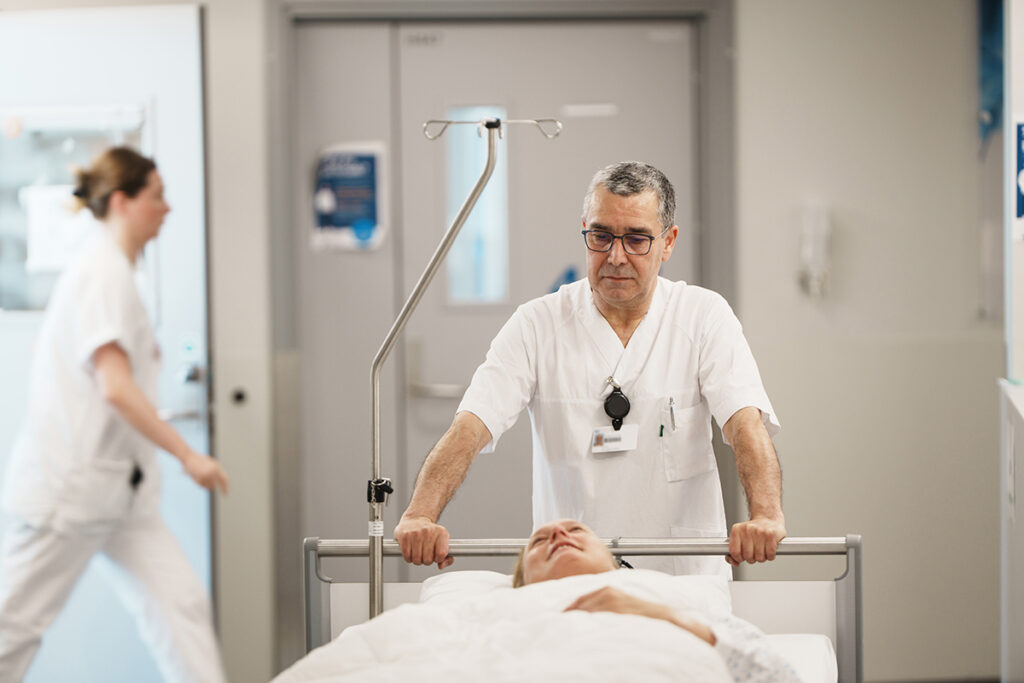

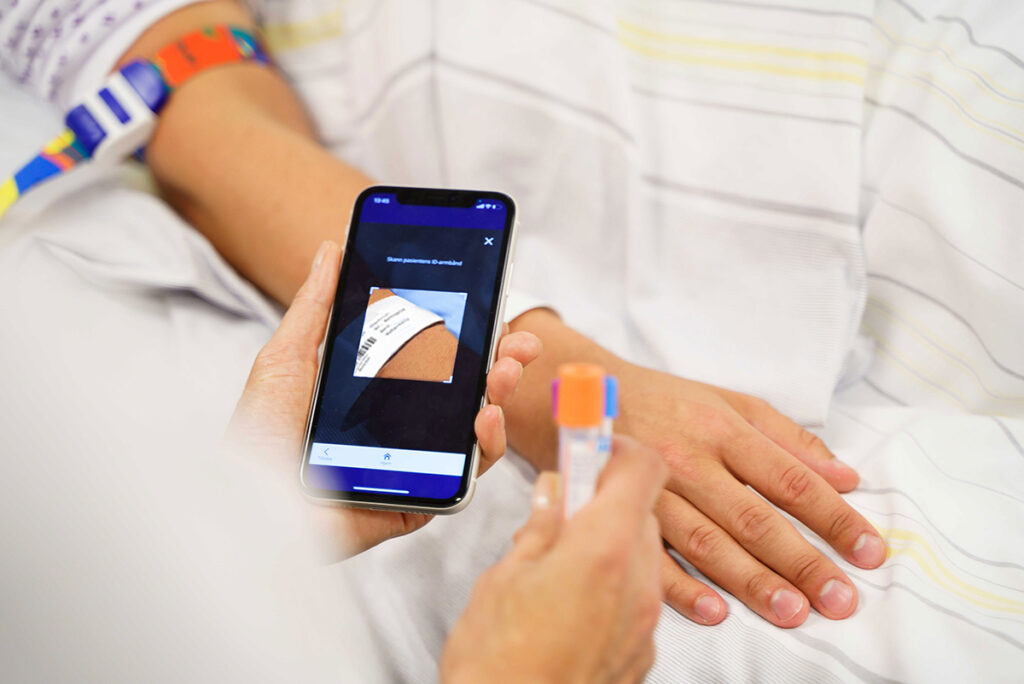
The 22 standards cover the full scope of portering work: governance, training and risk management; infection control and PPE; the transport of patients, specimens, equipment, linen, food and the deceased; and key performance indicators and reporting. An accompanying maturity matrix helps organisations work out where they currently stand, identify gaps and track progress over time. The standards are also tied explicitly into wider NHS priorities, including the 10 Year Health Plan, the forthcoming 10 Year Workforce Plan and the NHS People Promise.
No fixed deadline
NHS England hasn’t set a date by which the standards must be implemented. Instead, progress will be monitored through the Premises Assurance Model, with organisations reporting annually on compliance and providing evidence of improvement. Not every standard applies to every service, either. Organisations are expected to assess themselves only against the standards relevant to their local model, using the maturity matrix to work out where effort is best spent. For Trusts, this makes the standards less a project with a finish line and more an ongoing task of building and maintaining evidence.
What coordination technology can offer
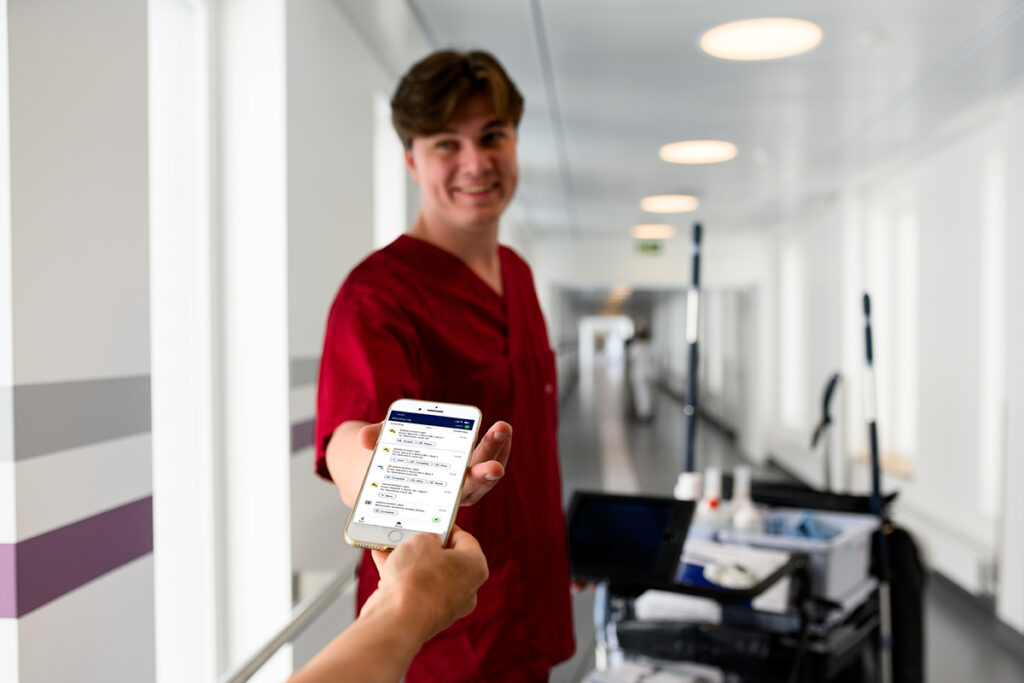
This is exactly the kind of gap that real-time task management is built to fill. A system that logs a request, allocates it to the right porter and tracks it through to completion generates the kind of operational record the standards ask for: clear ownership, timestamps, priorities and a trail of what happened when a task was missed or rejected. That is particularly relevant for transporting patients, specimens and blood products; moving goods, supplies, mail, linen and food; and reporting on reactivity, punctuality and efficiency. Linking this data to bed management and discharge workflows also highlights portering delays earlier, before they’ve already held up an admission or discharge.
What coordination technology can offer
This is exactly the kind of gap that real-time task management is built to fill. A system that logs a request, allocates it to the right porter and tracks it through to completion generates the kind of operational record the standards ask for: clear ownership, timestamps, priorities and a trail of what happened when a task was missed or rejected. That is particularly relevant for transporting patients, specimens and blood products; moving goods, supplies, mail, linen and food; and reporting on reactivity, punctuality and efficiency. Linking this data to bed management and discharge workflows also highlights portering delays earlier, before they’ve already held up an admission or discharge.
What remains the trust’s responsibility
It is important to be aware that coordination technology has its limits. It doesn’t deliver policy, workforce competence, statutory compliance or clinical procedure, and it can’t take over a Trust’s responsibility for training, safety controls and assurance. A platform can confirm that a sensitive transfer to the mortuary was assigned to two porters and completed on time. Whether those porters carried it out with the dignity and care required is a separate question, which the system can’t answer. Technology works best here as evidence sitting underneath the standards.
Better task allocation in practice: the return journey
Consider a porter taking a patient from a ward to radiology. Without a coordinated system, they typically head back to base empty-handed, waiting for the next call. With real-time task allocation, the porter can receive or select suitable work nearby on the return leg: returning a wheelchair, moving equipment, collecting another patient. Where location data is available, it can feed into that decision alongside staff availability, role and current workload. The outcome is more tasks completed and fewer empty journeys, without touching the priority or safety rules that apply to any individual task.

Better task allocation in practice: the return journey
Consider a porter taking a patient from a ward to radiology. Without a coordinated system, they typically head back to base empty-handed, waiting for the next call. With real-time task allocation, the porter can receive or select suitable work nearby on the return leg: returning a wheelchair, moving equipment, collecting another patient. Where location data is available, it can feed into that decision alongside staff availability, role and current workload. The outcome is more tasks completed and fewer empty journeys, without touching the priority or safety rules that apply to any individual task.
Turning measurement into improvement
Standard 22 asks organisations to track reactivity, punctuality and efficiency, but a KPI is only useful once a Trust can explain what sits behind it. Capturing request time, priority, assignment, acceptance and attendance makes it possible to pinpoint exactly where delay occurs in an emergency task: before assignment, before acceptance, or before attendance. Comparing scheduled against actual arrival times identifies which routes or task types run late most often. And tracking completed tasks per porter per hour, alongside return journey data, shows whether staffing actually matches demand hour by hour, or whether avoidable travel is quietly eating into capacity.
Portering has kept hospitals running for years without much visibility into how well, or how consistently, that happens. The national standards finally give the profession a shared language to talk about it. Coordinated task management won’t carry a Trust through all 22 standards by itself, but for the parts concerned with visibility, ownership and evidence, it can turn what used to be a once-a-year audit scramble into something closer to daily practice.