
Making the Maternal Care Bundle work in practice
Reflections from a former critical care nurse

By: Paul Hinchley, Clinical Solution Specialist, DNV Imatis
For almost twenty years, I worked as a Critical Care Nurse in the NHS. During that time, I cared for some of the sickest patients in the healthcare system, often at the point where deterioration had become life-threatening.
Looking back, the issue was rarely a lack of clinical knowledge or skill. More often, the warning signs had been recognised, risk factors documented and guidance made available. The challenge was turning that information into timely action.
My interest in maternity safety became more personal five years ago when my daughter experienced complications during the birth of her first child. That experience gave me a different perspective from my professional one and reinforced what safe, reliable maternity care means to women and families.
When the Ockenden Review into maternity services at Nottingham University Hospitals NHS Trust was published in June 2026, I followed its findings closely. The themes of communication failures, delayed escalation, fragmented multidisciplinary working, lack of situational awareness and failure to listen to women and families sadly felt familiar. Although the review focused on maternity services, many of the underlying issues reflected challenges I had encountered throughout my career in acute and critical care.

Photo credit: Wandsworth Healthcare RCHT Silent Ward
That interest led me to explore in greater detail the NHS England Maternal Care Bundle (MCB), released in early 2026. The MCB establishes best-practice standards across five clinical areas associated with maternal mortality and serious maternal morbidity: venous thromboembolism (VTE), pre-hospital and acute care, epilepsy in pregnancy, maternal mental health and obstetric haemorrhage. It was developed in response to persistent concerns around maternal outcomes and variation in care identified through successive MBRRACE-UK reports. NHS England cites its findings that improvements in care could have made a difference for 45% of women who died between 2021 and 2023. [england.nhs.uk], [nhsbmenetwork.org.uk]
Much of this was familiar from critical care. Guidance might be in place and risks recorded, but on a pressured shift, getting the right people to act at the right time could still be difficult.
Photo credit: Wandsworth Healthcare RCHT Silent Ward
That interest led me to explore in greater detail the NHS England Maternal Care Bundle (MCB), released in early 2026. The MCB establishes best-practice standards across five clinical areas associated with maternal mortality and serious maternal morbidity: venous thromboembolism (VTE), pre-hospital and acute care, epilepsy in pregnancy, maternal mental health and obstetric haemorrhage. It was developed in response to persistent concerns around maternal outcomes and variation in care identified through successive MBRRACE-UK reports. NHS England cites its findings that improvements in care could have made a difference for 45% of women who died between 2021 and 2023. [england.nhs.uk], [nhsbmenetwork.org.uk]
Much of this was familiar from critical care. Guidance might be in place and risks recorded, but on a pressured shift, getting the right people to act at the right time could still be difficult.
From guidance to consistent practice
As clinicians, we are rarely short of guidance, standards or pathways. Twenty years in frontline healthcare taught me that the difficulty comes on a busy shift, when several teams may need to identify a risk, share information and act quickly.
The findings emerging from MBRRACE-UK continue to highlight recurring themes including delayed recognition of deterioration, variation in care, communication challenges and missed opportunities for earlier intervention. Worryingly, maternal mortality remains higher than it was a decade ago, while significant inequalities persist for women from ethnic minority and deprived communities. [hqip.org.uk], [wrh.ox.ac.uk], [england.nhs.uk]
We have seen this problem before
I’ve seen many of these issues before, across my years in critical care. Critical Care Outreach Teams, Early Warning Scores (EWS), National Early Warning Score (NEWS) assessments and sepsis pathways were all introduced to support earlier recognition and response.
As NICE guideline CG50 sets out, gathering clinically relevant information and escalating it consistently and promptly secures an appropriate response and improves patient safety. [2020 surveillance of acutely ill adults in hospital: recognising and responding to deterioration (NICE guideline CG50)]
Risk assessments, observation charts and EWS help staff recognise concerns, coordination and escalation of them and make sure the right response follows. This process must work reliably each time. Every element of the Maternal Care Bundle depends on the same consistent follow-through.
Coordinating care across teams and services
When a woman’s clinical risk increases, the response may involve midwives, obstetricians, anaesthetists, emergency clinicians, mental health specialists, primary care and ambulance services.
NHS England explicitly describes the Maternal Care Bundle as requiring coordinated action across multiple NHS services rather than maternity teams alone. [england.nhs.uk]
A completed assessment needs to reach the people responsible for the next step. The same applies to a referral. Everyone involved needs to know what has been identified, what needs to happen and who is responsible for taking it forward. These same practical issues shaped my interest in how healthcare organisations in Norway approach patient safety.
What can the NHS learn from Norway?
In my current role as Clinical Solution Specialist at DNV Imatis, I work closely with healthcare organisations in Norway. Their clinical practice may not be markedly different, but I have been struck by the emphasis they place on coordination, transparency and the use of data to support improvement.
What can the NHS learn from Norway?
In my current role as Clinical Solution Specialist at DNV Imatis, I work closely with healthcare organisations in Norway. Their clinical practice may not be markedly different, but I have been struck by the emphasis they place on coordination, transparency and the use of data to support improvement.
Norway ranked first among 38 OECD countries for patient safety, according to analysis from Imperial College London’s Global State of Patient Safety 2025 report. The report examined a range of measures including maternal mortality, neonatal outcomes, treatable mortality and adverse effects of medical treatment. [imperial.ac.uk], [imperial.ac.uk]
Norway faces many of the same pressures as the NHS, including workforce constraints, increasing demand and greater clinical complexity. This Norwegian case study points to a sustained focus on transparency, the use of data, leadership and organisational culture. It also recognises that regulation alone does not change practice.
These lessons are relevant to the Maternal Care Bundle. Standards matter, but they need to be supported by working practices that help teams identify risk, coordinate action and learn from what happens in practice.
In my current role, I have also seen how Norwegian healthcare organisations use shared operational information to support coordination across teams. In practice, this comes down to spotting risk early, ensuring concerns get to the right person, coordinating the teams involved and knowing whether the agreed actions have taken place. Greater consistency in these areas can help reduce variation in care.
From retrospective assurance to real-time assurance
Retrospective audit plays an important role in governance and learning. Services also need a current view of whether pathways are being followed so gaps can be addressed while care is under way.
This shift aligns with the direction of the 10 Year Health Plan for England, which places earlier intervention, prevention and digital enablement within the wider transformation of the NHS. [gov.uk], [england.nhs.uk]
In maternity services, this means knowing whether the agreed actions are being followed right now, not only when the case is reviewed later.
Technology that supports informed action
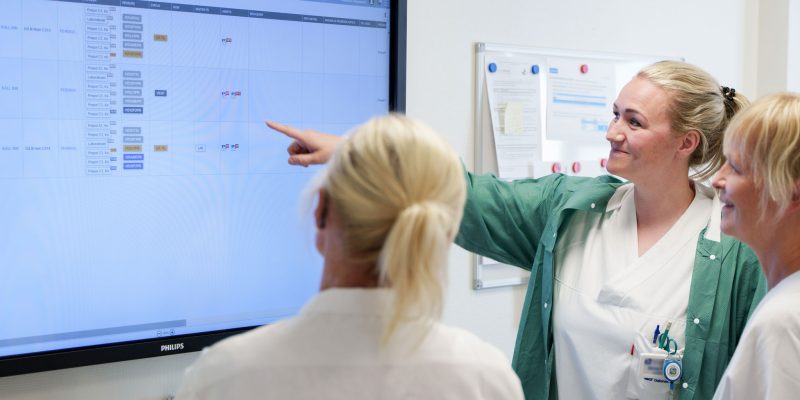
Digital tools cannot replace clinical judgement or address workforce and cultural issues on their own. They can, however, help teams see whether agreed actions have taken place, coordinate workflows and escalate concerns across existing systems.
My work with DNV Imatis has shown me how operational technology can support the practical application of clinical guidance. These approaches can work alongside Electronic Patient Records to improve visibility across care pathways, manage escalation processes, reduce administrative work and help teams act on available information.

Photo credit: Wandsworth Healthcare RCHT Silent Ward
Technology that supports informed action
Digital tools cannot replace clinical judgement or address workforce and cultural issues on their own. They can, however, help teams see whether agreed actions have taken place, coordinate workflows and escalate concerns across existing systems.
My work with DNV Imatis has shown me how operational technology can support the practical application of clinical guidance. These approaches can work alongside Electronic Patient Records to improve visibility across care pathways, manage escalation processes, reduce administrative work and help teams act on available information.
Photo credit: Wandsworth Healthcare RCHT Silent Ward
Putting the Maternal Care Bundle into practice by March 2027
All NHS trusts providing maternity services and integrated care boards are expected to implement the Maternal Care Bundle fully by March 2027.
In my experience, the work now is to build the bundle into everyday care, so that concerns are heard, information reaches the right people and agreed actions are completed promptly and consistently.